
Arrest History in West Virginia
County sheriffs, municipal police, West Virginia State Police troopers, campus police, and other authorized officers create arrest and incident records. A WVDCR regional jail or another custodian then makes a separate booking record with received charges, fingerprints, a photograph, bond references, and custody status. Magistrate Court creates the complaint, warrant or service event, initial appearance, and bond docket. Circuit Court may later hold the felony indictment and judgment.
The West Virginia State Police Criminal Identification Bureau receives fingerprint-supported arrest data and court disposition reports for the statewide history. That compiled file differs from the booking sheet, agency narrative, and court docket. One West Virginia arrest can appear in all four places at different times. A citation can create a court case with no jail admission. A booking may post before the complaint appears online. Release changes custody status, but it does not erase the agency or court record.
West Virginia Arrest Counts
Official counts describe different workloads. The WVSP Criminal Identification Bureau reported about 43,046 criminal arrest events processed in its 2023 to 2024 report, along with 25,905 criminal cards and 49,122 Court Disposition Reports imaged. Those are repository events, not unique people and not a crime rate. Separately, the FBI Crime Data API reports 34,034 West Virginia arrests for calendar 2024, including 6,631 drug or narcotic arrests, 4,378 simple assaults, and 2,976 DUI arrests.
The FBI Crime Data Explorer provides the official interface for comparing reported arrest data by place, year, and category.
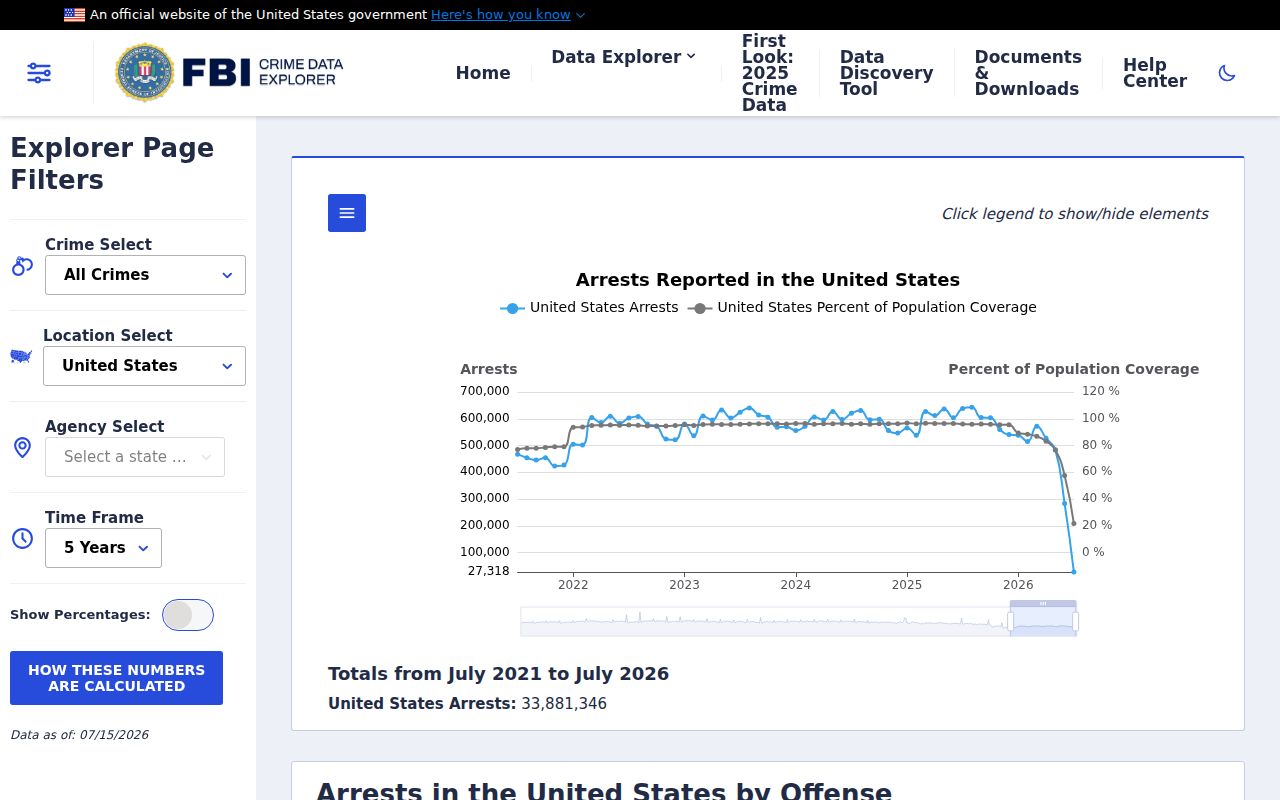
The dashboard supports statewide context, but it cannot identify a person or prove that every agency reported without delay.
Counts must not be mixed with jail admissions. WVDCR charge-entry totals reflect charges received at intake, not people or proven offenses. Participation, classification, and reporting lag can change UCR results. Use statistics to understand scale. Use official custody, court, agency, and fingerprint channels to research a specific West Virginia arrest record.
How Arrests Become Part of a West Virginia Record
The record chain starts with the arresting officer's report. Intake staff make the booking entry and capture fingerprints. Those prints and arrest data move to the WVSP Criminal Identification Bureau, where they are matched to a West Virginia Computerized Criminal History record. Later, Magistrate or Circuit staff report each charge's outcome. The repository is most useful when the identifying data, fingerprints, arrest event, and court disposition all arrive and match.
Data flow: Arrest › Booking › Fingerprint Submission › WVSP Repository Entry
Gaps can occur. Citation releases may lack a booking and fingerprint event. Names may be spelled in different ways. A disposition can arrive late or fail to link to the correct arrest cycle. The court may amend the original charge. For a self-audit, compare the fingerprint-based WVSP history with certified dispositions from the courts that heard each case. A statewide history is a compiled index, not a packet of all source documents.
West Virginia Booking Photo Limits
A booking photograph identifies the custody record. It does not prove guilt. West Virginia did not create one universal public mugshot gallery. Access can depend on FOIA exemptions, redaction, active-investigation needs, juvenile and victim privacy, and which agency controls the file. WVDCR also restricts republication as an arrest-photo compilation and bulk copying beyond three photos except for specified common-enterprise news use.
For a qualifying minor offense, law enforcement generally may not post the photo on social media unless there is a conviction, a fugitive or imminent-threat reason, or a court order tied to a legitimate interest. After dismissal, no bill, acquittal, reversal, or vacatur, the agency must remove its post within 14 days of a proper request from the subject or representative. This rule concerns agency social-media posts. It does not by itself erase the arrest, jail, court, or repository record.
How to Look Up West Virginia Arrests
There is no unrestricted public WVSP name-only criminal-history portal. The best public route depends on the question. WVDCR is the starting point for recent regional-jail custody. MCRSearch can show a complaint, warrant service, initial appearance, bond, and misdemeanor events. WVPASS follows a felony into Circuit Court. The arresting agency holds the incident narrative. A fingerprint-based WVSP check through IdentoGO is the route for reviewing one's own statewide history.
- Search WVDCR Daily Incarcerations and the Regional Jail search by the correct name, likely county or facility, and nearby dates.
- Search MCRSearch for the complaint and bond, then WVPASS if the matter advanced to Circuit Court.
- Use the directory of all 55 West Virginia counties to reach the sheriff, Magistrate Clerk, Circuit Clerk, and relevant municipality.
- Request the arresting agency's incident or arrest report, using a precise FOIA request when no direct channel exists.
- Compare the arrest entry with the final court judgment before drawing a conclusion.
Note: Search name variants and dates, but use fingerprints or a verified case number to resolve identity.
West Virginia Custody Search Channels
West Virginia's regional system differs from a state where every sheriff runs a public county jail roster. Many counties send arrestees to WVDCR-operated Regional Jail and Correctional Facilities. The regional-jail search answers recent and pretrial custody questions. Daily Incarcerations helps track admissions by date, county, or facility. A separate prison search covers sentenced state custody. Escapees and absconders have another route.
The WVDCR search hub brings the jail, prison, daily-incarceration, and absconder channels together.
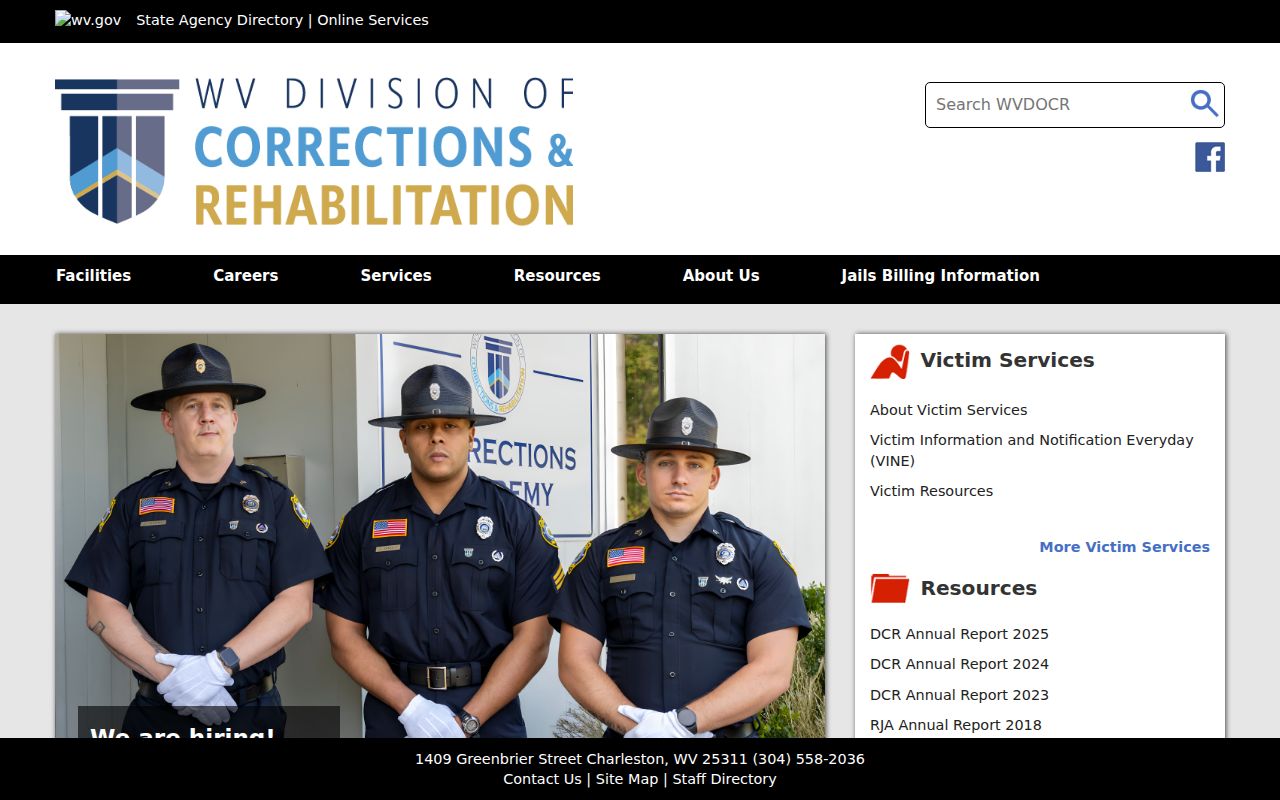
Choose the tile that matches the custody stage because a regional-jail result and a prison profile answer different questions.
| Channel | Best use | Key limit |
|---|---|---|
| Daily Incarcerations | Admissions near a known date, county, or facility | Not a final case outcome |
| Regional Jail Search | Recent, pretrial, or shorter custody | Release or transfer can change visibility |
| Prison Offender Search | Sentenced state-prison custody | Not the source for the arrest narrative |
| BOP Inmate Locator | Federal custody | Federal case details remain in PACER |
What an Arrest Record Shows
An arrest record changes as information moves among the agency, jail, court, and repository. The agency file can include probable-cause facts and evidence references. WVDCR focuses on intake and custody. The court records filed charges and judicial events. WVSP links fingerprints to the reported arrest cycle. No single source is guaranteed to show every field below.
| Name & Identifiers | Full name, aliases, physical descriptors, and fingerprint-linked identifiers where authorized. |
|---|---|
| Arrest Date & Location | When and where custody began, with incident or transaction references. |
| Arresting Agency | Sheriff, municipal police, WVSP, campus police, or another authorized body and its ORI. |
| Charges at Booking | Alleged statutes received at intake, which may differ from later prosecuted charges. |
| Booking Record | OIS or intake number, booking time, photo, fingerprints, facility, and committing authority. |
| Bond / Release | Bond type or amount, status, court date, and release or transfer information when public. |
West Virginia Arrest Record Gaps
If the WVDCR search returns no match, check spelling, aliases, release, transfer, citation-only processing, and the search date. Juvenile confidentiality may block public results. A federal detainee can be held in a regional facility for the U.S. Marshals and still require PACER for the case. Call the likely facility when online data is unclear. Then search the court because a complaint can exist without a current jail profile.
Custody alerts answer a narrower need. The VINELink service used in West Virginia supports notification for events such as release, transfer, or escape.
An alert helps monitor custody change, but the court judgment remains the source for the legal disposition.
Older or released booking records may require a WVDCR request. The arrest report belongs to the agency that created it. Under the West Virginia FOIA, identify the record, date range, incident or case number, preferred format, and a fee ceiling. Ask for segregable public parts if an exemption applies. The public body generally must produce, arrange inspection, or deny in writing within five business days, excluding weekends and legal holidays.
West Virginia Arrest Reports by Agency
The right custodian depends on who made the arrest. A sheriff keeps its incident and arrest reports. A municipal police department controls city records. WVSP reports remain with the responsible detachment or unit, not the CIB history desk. Campus police records go to the institution's police custodian. Federal agency records use the agency's FOIA route, while the federal prosecution appears in PACER. WVDCR controls booking and custody data, not the street investigation.
Ask for existing records, not answers to questions. Include the name, date, location, agency, incident number, and requested document. An active investigation, victim information, juvenile status, or protected identifiers can support withholding or redaction. For the court outcome, use the Magistrate or Circuit Clerk. For an authorized fingerprint history, use WVSP and IdentoGO. The full West Virginia arrest trail is a chain of sources, not one master public search.
Keep the identifiers from each source. The incident number connects the agency report to the arrest. The OIS or booking number identifies the custody event. A Magistrate case number tracks the complaint and bond. A later Circuit number tracks the indictment and felony judgment. The WVSP state identification number links fingerprint-supported cycles in the repository. Matching dates, agencies, and courts across those identifiers can expose a delayed disposition or a charge that changed after intake. It also prevents a broad name match from being mistaken for the correct person.
Arrests vs Convictions
An arrest records custody or an accusation event. A conviction is a court judgment of guilt after an accepted plea or adjudication. Received booking charges may be amended, dismissed, or replaced. Bond release is not dismissal. A jail profile may retain the intake charge while the court docket shows a different prosecuted offense. Read the judgment for each charge and do not treat a name match as identity proof.
| Arrest Record | Conviction Record | |
|---|---|---|
| Created by | Arresting agency and custodian | Court judgment reported to the repository |
| What it proves | An arrest, citation, or booking event was recorded | Guilt was entered by plea or court decision |
| Public route | Agency, WVDCR, and court channels with limits | Public court file and authorized repository history |
| Relief | Qualifying nonconvictions may use §61-11-25 | Only qualifying convictions may use §61-11-26 |
Note: An arrest entry without a disposition is not proof of guilt; verify the result with the filing court.